Four-Needle Six-Thread: The Flatlock Seam Behind Chafe-Free Yoga Wear
Run a finger along the inner seam of a good pair of yoga leggings and you will feel almost nothing — no raised ridge, no scratchy edge. That flat, barely-there seam is usually a four-needle six-thread flatlock stitch. Here is what the term actually means, why almost every serious yoga brand specifies it, and how to check it when you audit a factory.
What "four-needle six-thread" actually means
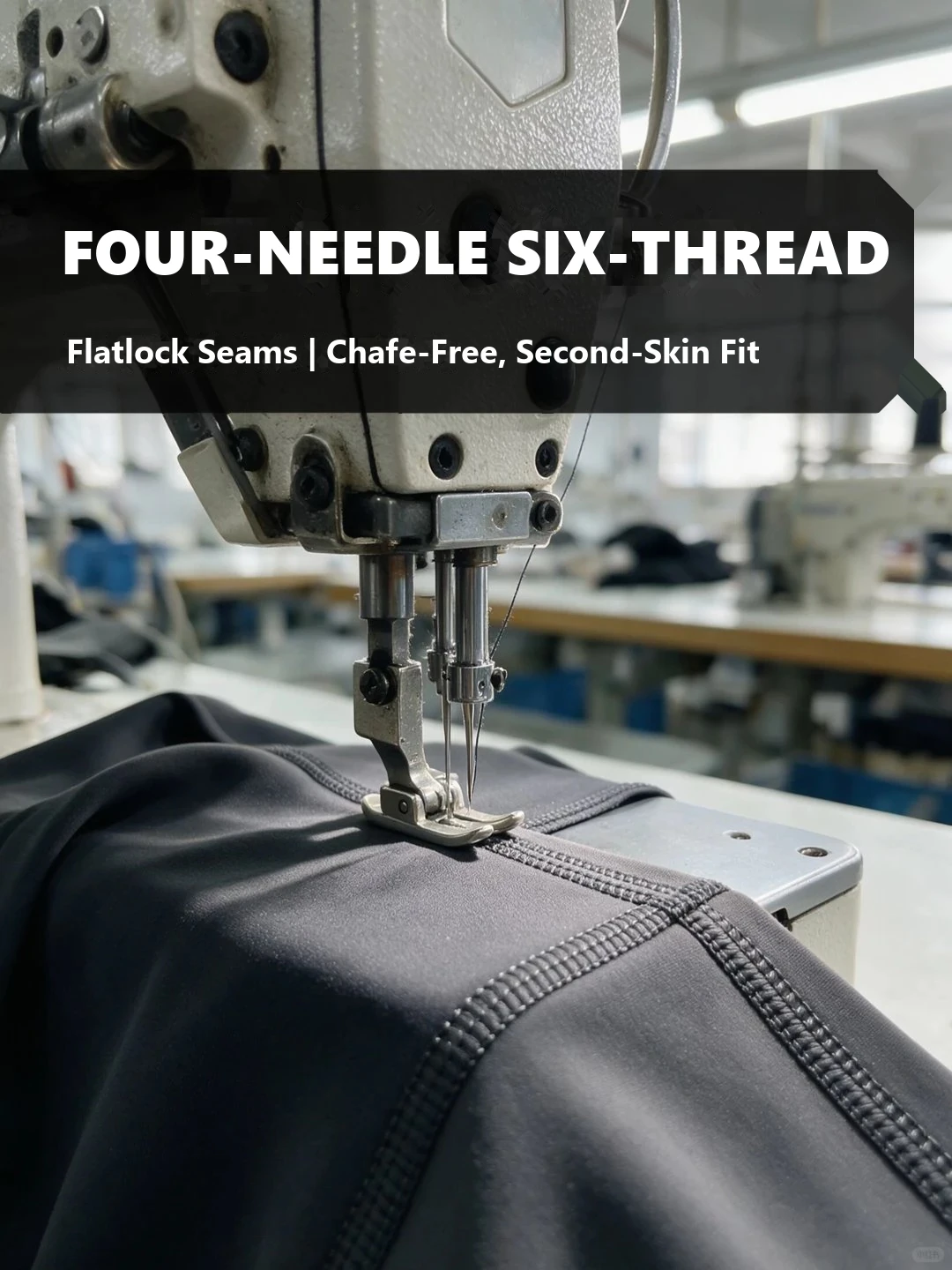
Four-needle six-thread (often written 4N6T, or in Chinese listings as 四针六线) describes the needle and thread count of a flatlock coverstitch machine: four needle threads on top, plus two looper threads underneath, six in total. The two fabric edges are butted together — not stacked on top of each other — and the six threads bridge the joint, spreading wide on both the face and the back of the garment.
The result is a seam with no bulk. Where an ordinary overlocked seam folds one edge over the other and leaves a raised ridge (what Chinese factories call 有骨, "with bone"), a flatlock seam lies completely flat against the skin. That is why the finish is also called 无骨拼接 — "boneless joining". On high-stretch knits it keeps the full width of the fabric working, so the seam stretches with the garment instead of fighting it.
Flatlock vs overlock vs coverstitch
- Overlock (serger): fast, elastic and cheap — the default on basic tees and budget leggings. But the seam is a raised ridge, so it can press lines into skin during long sessions and shows a bulky edge on sheer fabrics.
- Coverstitch: a parallel double line used mostly on hems. Flat on the face, but it is a hem stitch, not a joining seam.
- Four-needle six-thread flatlock: flat on both sides, strong, and stretch-friendly. It is slower and less forgiving than overlock — panel edges must be cut and fed precisely or the seam waves — which is exactly why it signals a higher construction standard.
Why yoga wear needs it
Yoga is a slow, floor-based practice done in skin-tight garments, so a seam that a runner never notices becomes a real problem at minute forty of a class. Flatlock seams matter on three counts:
- No chafe: nothing raised rubs the skin at the inner thigh, inseam or shoulder, even in deep lunges.
- Strength under stretch: six threads distribute load across a wide band, so deep squats and wide strides do not pop stitches the way they can on a narrow overlock chain.
- A clean, premium look: the seam reads as a neat topstitch line on the outside — the detail customers associate with studio brands rather than big-box basics.
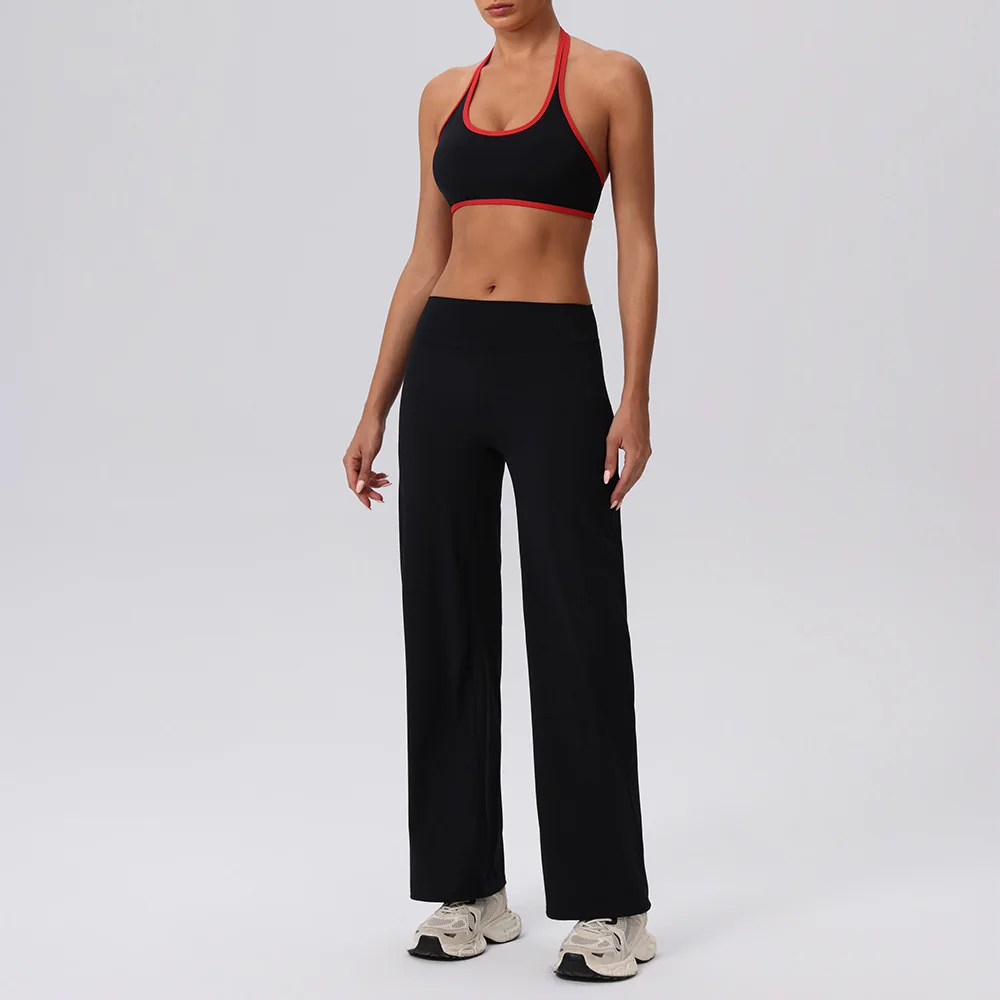
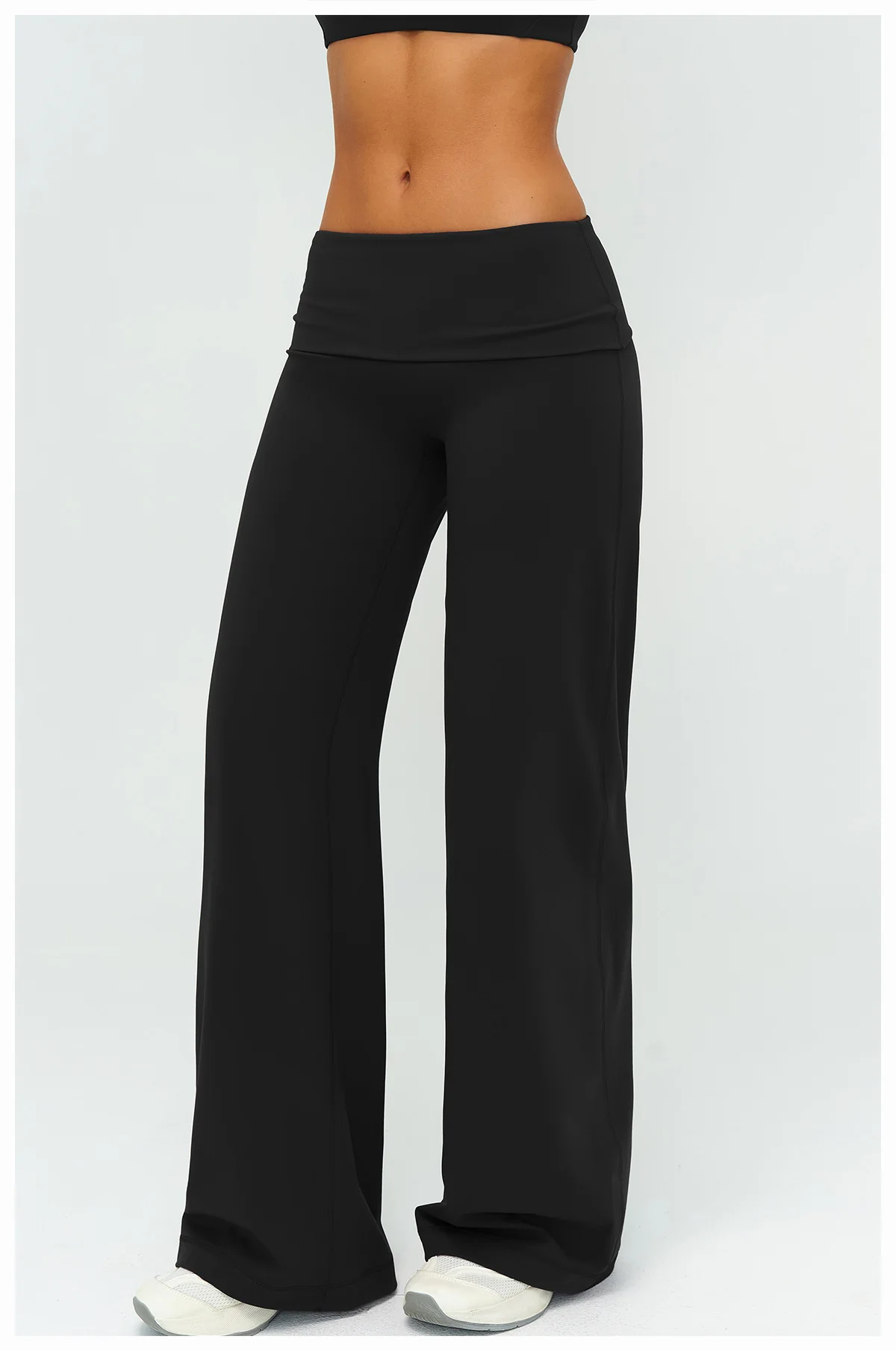
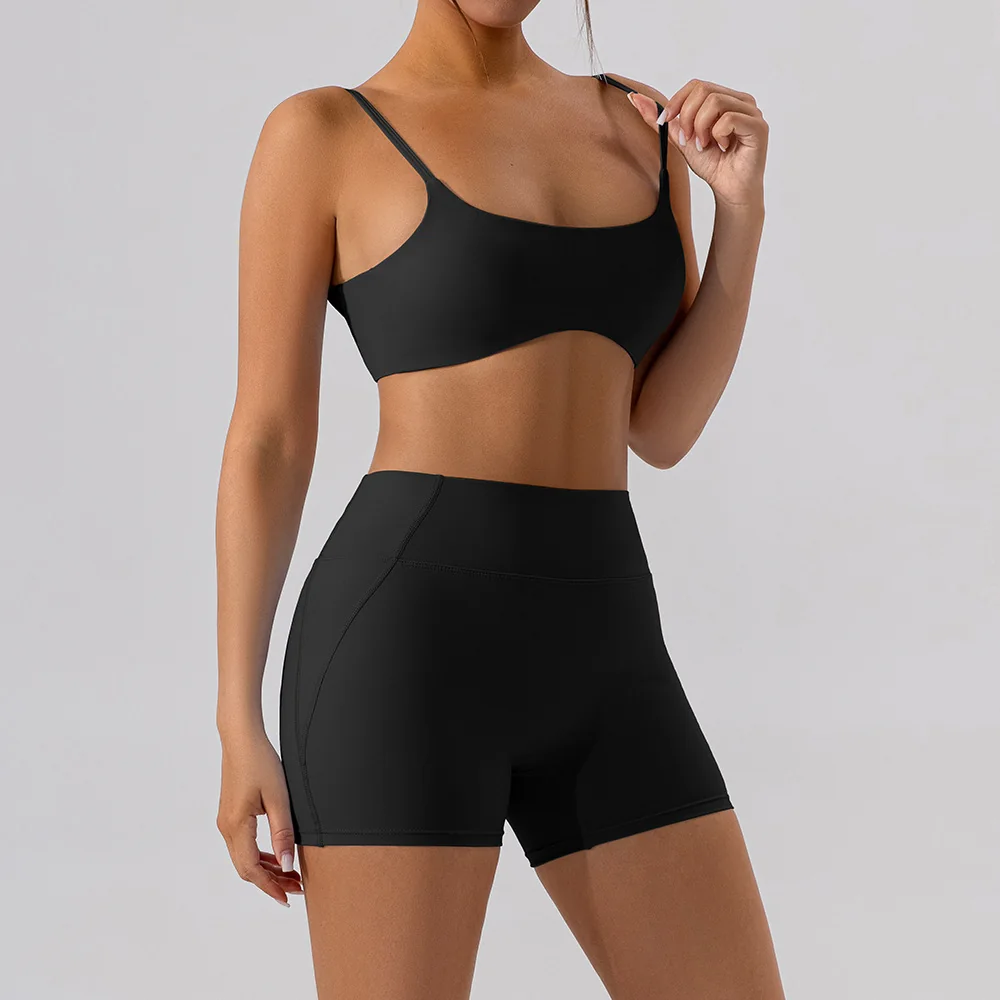
On our own yoga bodies we run 4N6T on the inseams, side seams and shoulder seams of leggings and fitted sets — the zones where skin contact and stretch are highest — and keep overlock for hidden, low-stress joins where it saves cost without costing comfort.
How to verify a supplier's flatlock claim
"Flatlock" appears on a lot of quotation sheets that do not survive a sample check. Before committing an order, take a sample garment and do these four checks:
- Stretch the seam sideways. A true flatlock opens slightly and recovers with no gap or whiskering. If the seam ridge lifts or stitches pop, it is overlock dressed up as flatlock.
- Count the thread lines. Four parallel rows of needle thread on the face, two looper lines on the back. Fewer rows means the machine was set up in a cheaper configuration.
- Check the density. Roughly 10-12 stitches per 3 cm (about 8-10 per inch) is the working standard for 200-260 gsm nylon-spandex knits. Sparse stitching looks fine new and fails after twenty washes.
- Feel the back side. The reverse should be just as flat as the face. A bumpy reverse means edges were overlapped instead of butted — the "bone" is still there.
Does flatlock cost more?
Marginally, yes. A 4N6T seam runs slower than overlock, so it adds a small amount per garment — typically a few US cents on a legging — but it uses no extra fabric and no special trims. It is one of the cheapest upgrades in activewear manufacturing relative to how strongly customers feel it, which is why we include it as standard on our in-stock yoga styles rather than treating it as a paid extra.
Build your line on proven construction
Every in-stock style on this site ships with four-needle six-thread flatlock on the seams that matter, 75/25 or 78/22 nylon-spandex fabric, and custom logo starting from 50 pieces per style. If you are comparing factories, ask each one the same question: show me the inseam of a sample, stretched — the answer tells you more than any certificate.
Want a sample in hand to check the stitching yourself? Request a sample set and we will ship one so you can feel the seam before you commit.